

The Rise of Steel Structure Buildings in Pakistan
Walk through any major industrial zone in Pakistan today Lahore’s Sundar Industrial Estate, Karachi’s SITE area, or the rapidly expanding corridors along CPEC routes and you will notice something changing fast. The skyline is no longer dominated solely by brick and concrete. Steel is rising.
A Shift That Has Been Building for Years
Pakistan’s construction industry has historically relied on reinforced concrete as the go-to material for industrial and commercial buildings. It worked. It was familiar. And for decades, it was more or less the only practical option at scale.
But things have changed. As industrial activity has intensified, as logistics and warehousing demand has surged, and as foreign investment has poured in through initiatives like CPEC, builders and developers have started looking for something better something faster, stronger, and more adaptable.
That something is structural steel.
Why Steel Makes Sense for Pakistan
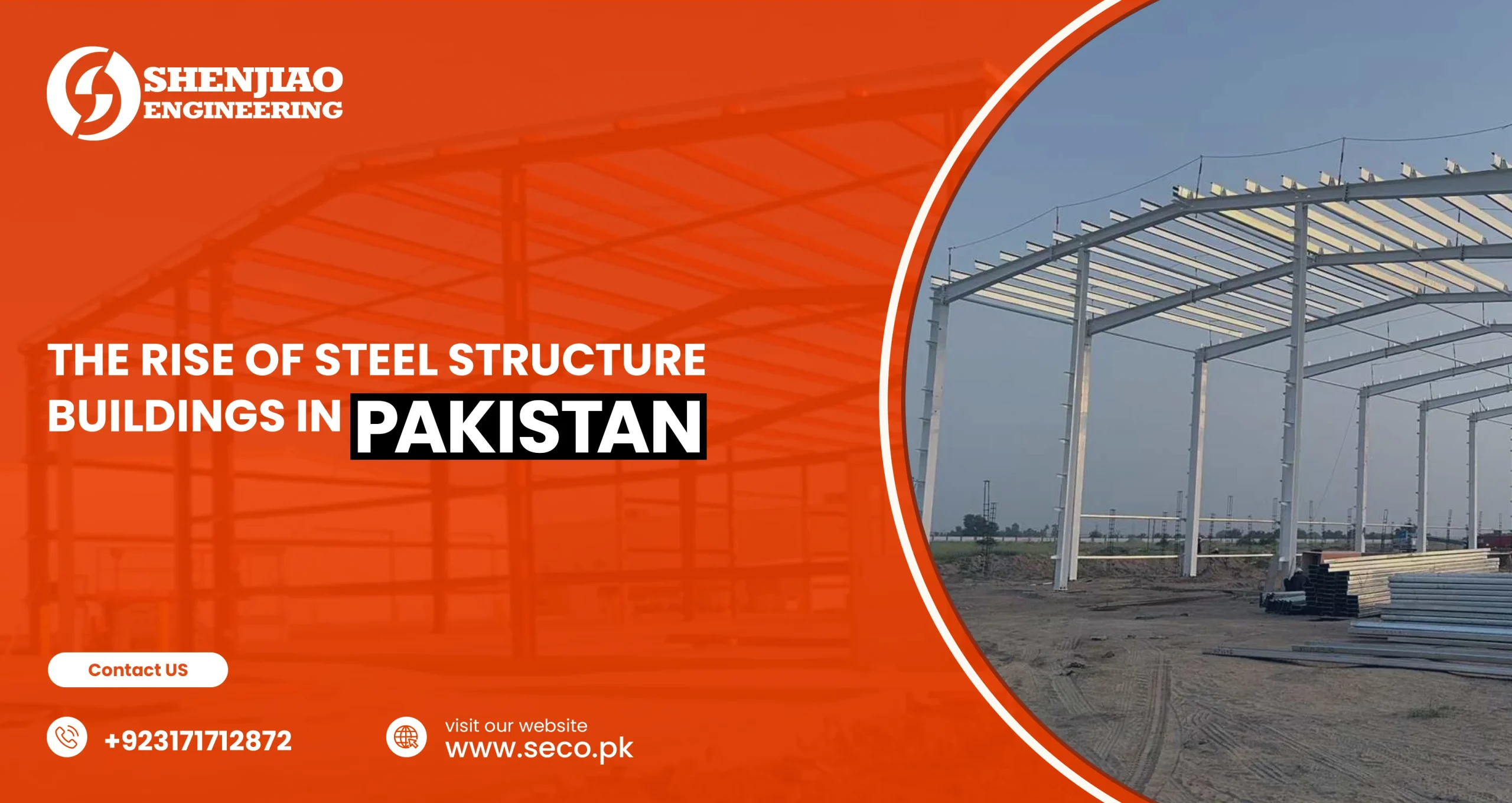
Steel structure buildings are not just a trend. They represent a fundamental rethinking of how large-scale construction should work in a country like Pakistan, where speed matters, land is expensive, and industrial demands are evolving rapidly.
Steel frames go up significantly faster than concrete ones. What might take months to pour, cure, and finish in concrete can be fabricated off-site and assembled on location in a fraction of the time. For businesses trying to get a factory, warehouse, or commercial space operational quickly, this speed advantage is enormous.
Steel is also remarkably strong relative to its weight. This means buildings can span wider distances without interior columns crucial for manufacturing floors, logistics hubs, and large retail spaces where open, unobstructed space is operationally necessary.
Then there is durability. A properly engineered steel structure, treated against corrosion and environmental stress, will stand for decades with minimal maintenance. In Pakistan’s varied climate from the dry heat of Sindh to the humid summers of Punjab that resilience has real value.
Industrial Demand Is Leading the Way
The sectors driving steel construction growth in Pakistan are telling. Textile factories, food processing plants, cold storage facilities, auto parts manufacturers, and logistics companies are all turning to steel frames for their new facilities.
These industries share a common need: large, clear-span interiors that can be reconfigured as operations change. A steel structure accommodates that far more easily than a concrete one. Need to add a mezzanine? Expand a wall? Install overhead cranes? Steel makes all of this significantly simpler.
Commercial construction is following suit. Retail parks, showrooms, multi-storey plazas, and mixed-use developments are increasingly incorporating steel frames both for practical reasons and because modern architectural aesthetics often call for the kind of open, glass-heavy designs that steel enables.
The China–Pakistan Knowledge Transfer
One factor that has meaningfully accelerated steel construction in Pakistan is the influx of Chinese engineering expertise that has accompanied CPEC investments. Chinese construction firms have decades of advanced experience with steel structures particularly pre-engineered buildings and that knowledge is now being transferred to Pakistani engineers, contractors, and developers.
Companies like SECO Shenjiao Engineering Company sit directly at this intersection. As a China–Pakistan joint venture, SECO brings internationally refined steel fabrication standards to local projects, combining global engineering capability with a deep understanding of Pakistan’s construction environment.
This kind of partnership matters. It is not just about importing materials or equipment. It is about elevating the technical baseline of Pakistan’s entire construction sector.
Steel Structures and Sustainability
There is another dimension to the steel revolution that is worth noting: environmental responsibility. Steel is one of the most recyclable materials in the world. At the end of a building’s life, steel components can be melted down and reused without significant loss of quality.
In a country increasingly aware of environmental challenges, this circular quality of steel has real long-term significance. Buildings constructed today with high-quality steel are not just investments in current infrastructure they are responsible assets that future generations can repurpose rather than demolish and discard.
When you factor in the reduced construction waste, the faster build times that minimize site disruption, and the energy-efficient designs that steel frames support, the environmental case for steel structures in Pakistan becomes quite compelling.
SECO’s Role in Pakistan’s Steel Construction Future
At SECO, we have watched this transformation unfold from the inside. Our work across industrial, commercial, and infrastructure projects has given us a front-row view of what Pakistani developers and businesses actually need from their buildings and what it takes to deliver those buildings to international standards.
We do not just fabricate steel. We engineer complete structural solutions from initial design and load calculations through fabrication, logistics, and on-site assembly. Every project we undertake is an opportunity to set a higher benchmark for what steel construction in Pakistan can look like.
The rise of steel structure buildings in Pakistan is not a passing phase. It is a permanent evolution of how this country builds. And for businesses, developers, and industrial operators who want to be part of that future, the conversation starts with choosing the right structural partner.
Final Thoughts
Pakistan is at an exciting moment in its construction history. The infrastructure demands of a growing economy, the influence of international engineering standards, and the practical advantages of steel have converged to create genuine momentum.
Whether you are planning a factory, a warehouse, a commercial complex, or an infrastructure facility, steel structures deserve serious consideration — not just as a material choice, but as a strategic one.
SECO is here to help you make that choice with confidence.
Contact us at seco.pk to discuss your next project.