


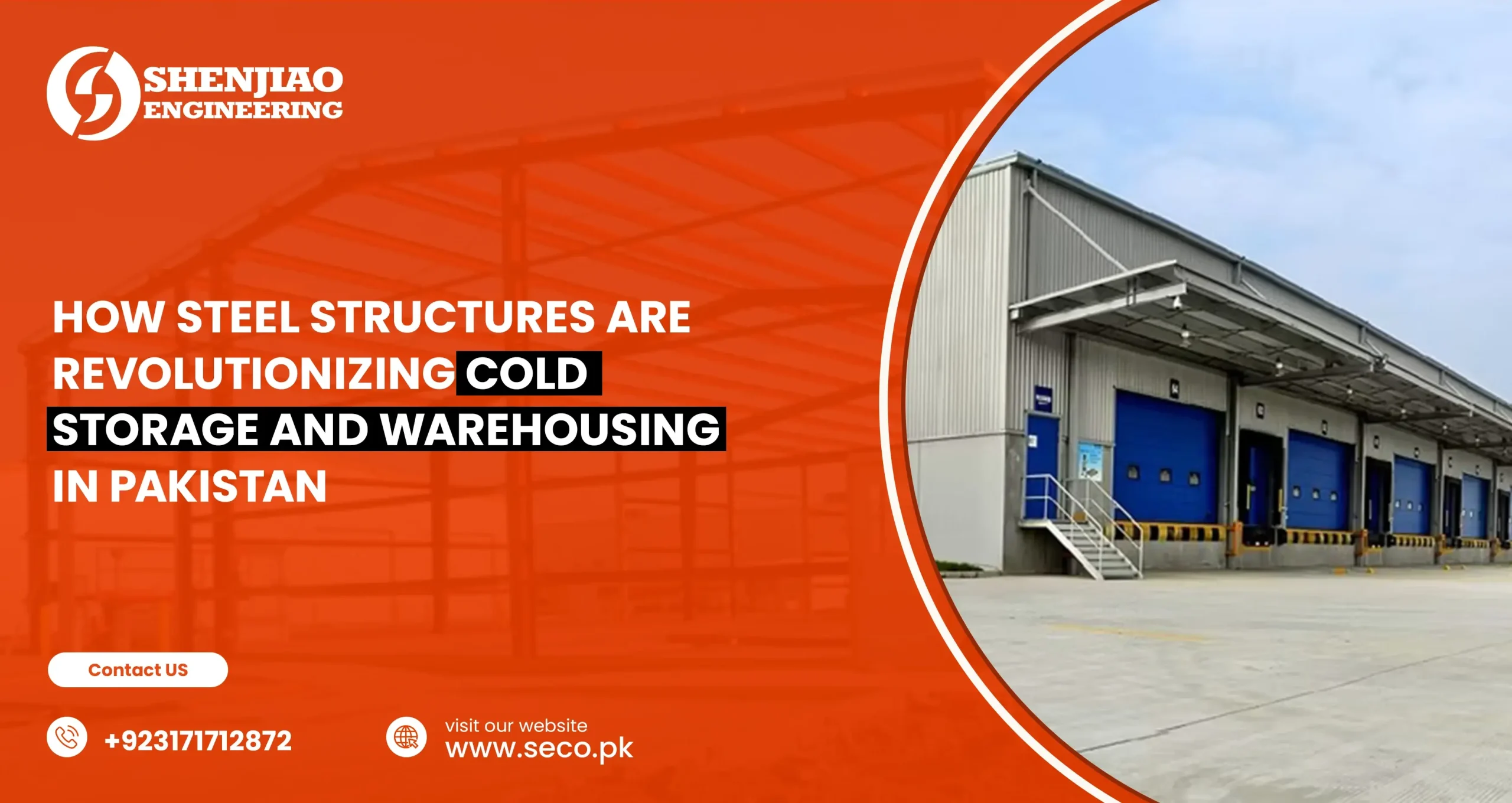
How Steel Structures Are Revolutionizing Cold Storage and Warehousing in Pakistan
Pakistan loses an estimated 35 to 40 percent of its perishable food production every year, including fruits, vegetables, dairy, meat, and fish, simply because it does not have enough cold storage and proper warehousing infrastructure to get food from farm to consumer without spoilage
That is not just a food security problem It is a massive economic loss and a supply chain crisis that affects everyone from small farmers to large retailers
The good news? That is changing Investment in Pakistan cold chain and warehousing sector has accelerated significantly, driven by modern retail, e-commerce, and agricultural exports At the heart of this transformation is one construction technology: steel structures
Why Cold Storage and Warehousing Infrastructure Matters in Pakistan
Pakistan is one of the world largest producers of mangoes, potatoes, and rice Yet a large share of this produce never reaches export markets in good condition because of inadequate logistics
As Pakistan economy grows and urbanises, the demand for quality cold storage is rising sharply When it comes to building these facilities quickly, cost effectively, and to international standards, steel structures are the clear answer
Why Steel Is the Ideal Material for Cold Storage Buildings
Cold storage facilities have very specific construction requirements that make steel structures the logical choice worldwide:
1 Insulated Panel Compatibility
The core requirement of any cold storage building is a high performance thermal envelope This is achieved using insulated sandwich panels Steel framed structures are perfectly designed to receive these panels The light steel purlins and girts allow precise installation and provide a consistent, airtight envelope
2 Clear-Span Interiors for Maximum Storage Efficiency
Cold storage efficiency depends on maximising volume That means tall buildings and wide, unobstructed interiors that allow high bay racking and forklifts to operate freely Pre-engineered steel buildings can achieve clear spans of 20 to 40 metres without internal columns
3 Speed of Construction
A prefabricated steel cold storage building can be erected in weeks rather than months Structural steel and insulated panels are fabricated offsite in parallel, delivered, and assembled in a highly efficient sequence
4 Hygiene and Cleanability
Steel surfaces, especially the smooth, coated inner face of sandwich panels, are non-porous, easy to clean, and resistant to mould and bacterial growth Panel joints can be sealed effectively to prevent pest ingress
5 Flexibility for Future Expansion
Steel structures can be extended in length with minimal structural disruption, which means you simply add more bays and extend the cladding This scalability is a significant operational advantage for growing businesses
Design Considerations for Cold Storage Steel Buildings
If you are planning a cold storage facility, here are the key design elements that must be addressed:
- Insulation thickness: The required panel thickness depends on operating temperature A blast freezer (-25°C) needs much thicker insulation than a chilled facility (0–5°C)
- Vapour barrier: Temperature differentials create condensation risk The building envelope must include vapour control layers to prevent moisture accumulating inside the insulation
- Floor insulation: For below zero cold stores, the floor slab must be insulated to prevent the ground beneath from freezing and cracking the slab
- Loading dock design: Dock levellers and insulated dock doors are critical to minimise temperature loss during loading and unloading
Steel Structures for Dry Warehousing
Everything above applies equally to dry warehouse construction Pakistan logistics and e-commerce boom is driving rapid growth in demand for distribution centres and fulfilment warehouses Modern distribution centres built for large retailers and logistics companies are almost universally steel framed due to the need for high eave heights and fast construction
SECO Capability in Cold Storage and Warehouse Construction
At Shenjiao Engineering Company (SECO), we have the engineering capability and fabrication capacity to deliver steel structures for cold storage and warehousing projects of any scale across Pakistan
Our team understands the specific requirements of cold chain facilities, from insulated panel systems to refrigeration plant integration We have delivered large scale warehouse and industrial structures across Punjab, Sindh, KPK, and beyond
Contact SECO today for a consultation and quotation on your cold storage or warehousing project
Frequently Asked Questions (FAQ)
What thickness of insulated panel do I need for a cold storage building in Pakistan? It depends on your operating temperature For a chilled store (0–5°C), 80 to 100mm PIR panels are typically adequate For a frozen store (-25°C), 150 to 200mm panels are standard
Can SECO supply and install insulated sandwich panels as well as the steel structure? Yes We supply and install the complete building envelope including insulated sandwich panels for walls and roof
How long does it take to build a cold storage facility? A medium sized cold storage building can typically be structurally complete and clad within 10 to 14 weeks from order
Is it possible to convert an existing steel warehouse into a cold storage facility? In some cases, yes, by installing insulated lining panels inside the existing structure SECO can assess your existing building and advise on the options
What is the minimum building height recommended for a cold storage warehouse? For a racked cold store, a minimum clear internal height of 8 to 10 metres is recommended to allow for high bay racking
Shenjiao Engineering Company (SECO) is a leading steel structure company in Pakistan, based in Lahore We specialise in industrial, commercial, agricultural, and cold chain construction
Contact us at info@seco.pk or call 0317-1712872 to discuss your warehousing project today