


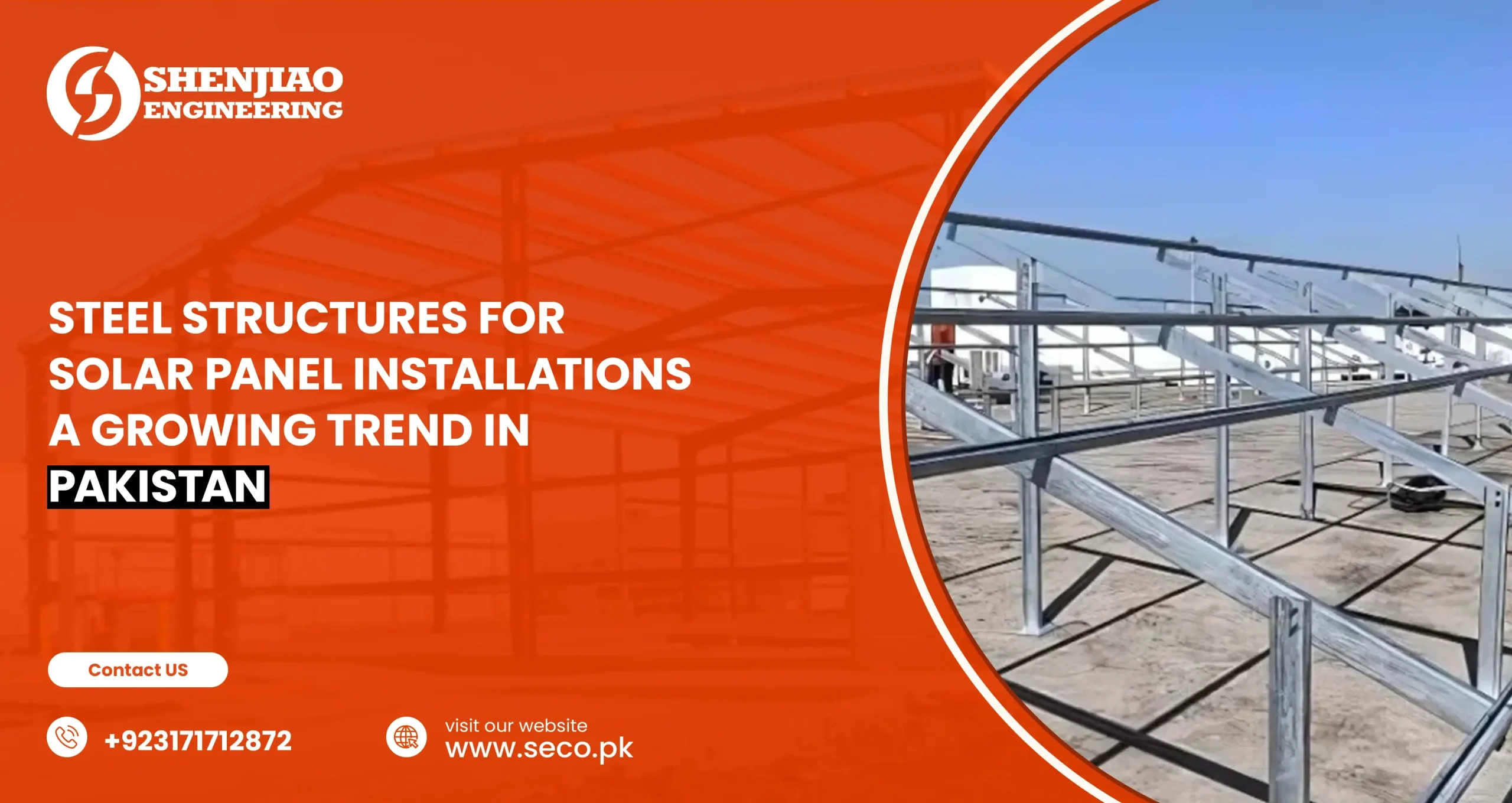
Steel Structures for Solar Panel Installations in Pakistan | SECO
Pakistan is in the middle of a solar energy revolution. Between high electricity tariffs, unreliable grid supply, and one of the highest solar irradiance levels in the world, the case for solar power in Pakistan has never been stronger. From rooftop installations on homes in Lahore to utility scale solar farms in southern Punjab and Balochistan, solar capacity is accelerating.
But behind every solar panel — whether it is on a factory roof, an open field, or a car park canopy — there is a steel structure holding it in place. That structure is a critical engineering component that determines whether your solar investment survives Pakistan climate and delivers returns for 25 years or more.
At SECO, we design and fabricate steel mounting structures for solar installations of all types and scales. Here is everything you need to know.
Why Steel Is the Dominant Material for Solar Mounting Structures
When it comes to solar mounting, you have a few material choices. For the majority of commercial, industrial, and utility scale solar projects in Pakistan, steel is the material of choice.
- Strength and load capacity: Steel offers a higher strength to cost ratio than aluminium for large structures. For ground mount systems carrying hundreds of panels, steel provides the structural rigidity needed without excessive material cost.
- Durability in Pakistan climate: Rooftop structures face intense UV, heat cycles, monsoon rain, and dust. Properly coated steel — hot dip galvanised or with a quality paint system — handles these reliably for decades.
- Cost-effectiveness at scale: SECO fabricates mounting structures in our Lahore facility, which means economies of scale, quality control, and competitive pricing that off the shelf systems cannot match at volume.
- Customisation: Every solar project is different. Steel fabrication allows fully custom structures designed to the specific requirements of each project.
Types of Solar Mounting Structures SECO Fabricates
1 Rooftop Solar Mounting Structures
Factory roofs, warehouse roofs, and commercial building rooftops are prime real estate for solar panels. For steel structure buildings like SECO built factories, rooftop solar integration is particularly straightforward as the existing purlin and rafter structure can often be used as the attachment point.
Key design considerations for rooftop structures include:
- Wind uplift loads: Panels act like sails in high winds, and the mounting structure must resist uplift forces.
- Roof load capacity: The existing roof structure must be able to carry the additional dead load of panels and mounting.
- Panel tilt angle: In Pakistan, a tilt of approximately 25 to 30 degrees is typically optimal for maximising annual energy yield.
2 Ground-Mount Solar Structures
Ground mount systems are used for larger installations where roof space is unavailable. SECO fabricates both fixed tilt and single axis tracker compatible ground mount structures.
Ground mount structures must be designed for:
- Wind loads: Particularly important in open sites with no wind shielding.
- Soil conditions: Foundation type depends on the local soil bearing capacity and depth to rock.
- Flood risk: Common in Punjab and Sindh; column heights must keep panels clear of flood water levels.
3 Solar Carport Structures
Solar carports combine covered parking with solar power generation. A solar carport is essentially a steel canopy structure where solar panels replace conventional roofing material. SECO designs these in single row and double row configurations.
Benefits for Pakistani commercial clients include:
- Additional solar capacity without using roof or ground space.
- Shaded parking which is a significant benefit in Pakistan intense summer heat.
- A visible demonstration of sustainability commitment.
4 Solar Structures for Agrivoltaics
An emerging application in Pakistan is agrivoltaics — combining solar power generation with agricultural production. Solar panels are mounted on elevated steel structures typically 3 to 4 metres above ground level, allowing crops to grow beneath.
Galvanisation: Why It Matters for Solar Structures
Any steel structure that will be outdoors for 25 years must have robust corrosion protection.
Hot dip galvanising is the standard for solar mounting structures. The steel is immersed in molten zinc which bonds to the steel surface. A properly hot dip galvanised structure can last 40 to 50 years in typical Pakistani outdoor conditions without significant corrosion.
At SECO, we specify and arrange appropriate galvanising for all solar mounting structures. Do not accept a solar mounting structure with only paint — in Pakistan outdoor conditions, it will not last.
The Engineering Behind a Solar Mounting Structure
A properly engineered solar mounting structure requires:
- Wind load analysis: Solar panels generate significant wind loads. The structure and foundations must be designed for the wind speeds applicable to the specific site.
- Dead and live load calculations: The weight of the panels themselves and maintenance personnel loads.
- Foundation design: Column foundations must be designed for the specific soil conditions at the site.
- Connection design: Bolt sizes and weld specifications must be properly designed. Connection failures are the most common cause of solar structure collapse.
SECO Solar Structure Projects and Capability
SECO has fabricated and erected steel mounting structures for solar projects across Pakistan. Our engineering team designs structures in accordance with applicable load standards, and our fabrication facility ensures quality and consistency at scale.
We work directly with solar EPC contractors and factory owners to deliver the structural package for their solar projects.
Contact SECO for a free quote and let us talk about your solar structure project.
Frequently Asked Questions (FAQ)
Can SECO design solar structures for both rooftop and ground mount projects? Yes. We design and fabricate steel mounting structures for rooftop, ground mount, carport, and agrivoltaic solar applications.
How long does a hot dip galvanised solar structure last in Pakistan? A properly hot dip galvanised steel structure can last 40 to 50 years in typical outdoor conditions in Pakistan.
Does SECO supply the solar panels as well or just the mounting structure? SECO specialises in the steel mounting structure. We work alongside solar EPC contractors who supply and install the panels and electrical systems.
Can an existing SECO steel building be retrofitted with rooftop solar? Yes. In most cases, SECO built structures can accommodate rooftop solar with appropriate structural verification.
Shenjiao Engineering Company (SECO) is a leading steel structure company in Pakistan, based in Lahore. We design and fabricate steel structures for industrial, commercial, agricultural, and renewable energy applications.
Contact us at info@seco.pk or call 0317-1712872 to discuss your solar project today.