


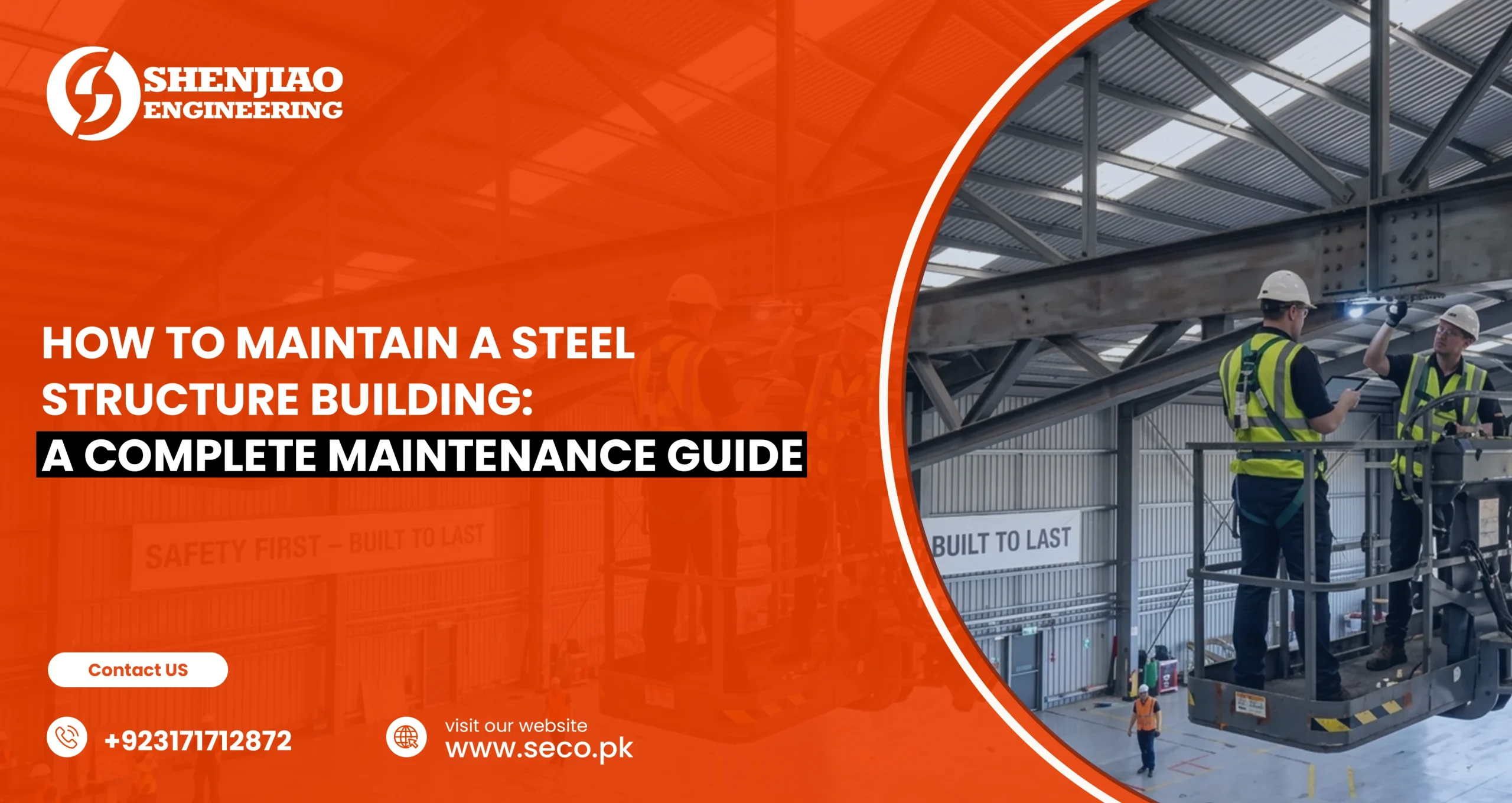
How to Maintain a Steel Structure Building: A Complete Maintenance Guide
If you have invested in a steel structure building whether it is a factory, warehouse, commercial unit, or prefabricated facility you already know the benefits: strength, speed of construction, and long-term value. But here is something many building owners do not think about until it is too late: steel structures need maintenance, too.
The good news? Compared to traditional concrete buildings, steel structures are far easier and more cost-effective to maintain if you do it right and on time.
At SECO (Shenjiao Engineering Company), we have designed, fabricated, and erected steel structures across Pakistan for years. In this guide, we are sharing exactly what it takes to keep your steel building in top condition for decades.
Why Steel Structure Maintenance Matters
Steel is one of the most durable building materials available. But it is not invincible. Exposure to rain, humidity, industrial chemicals, heat cycles, and physical stress can all take a toll over time.
Skipping maintenance does not just shorten your building life it creates expensive problems down the line. A small rust spot left untreated can spread. A loose bolt in a joint can compromise the entire structural load path. A drainage issue on the roof can lead to water intrusion and long-term damage to insulation, equipment, and internal finishes.
Regular maintenance protects your investment, keeps your facility safe, and avoids costly emergency repairs.
How Often Should You Inspect a Steel Structure
There is no single answer that fits every building, but a practical schedule looks like this:
Monthly visual checks
Walk around the building perimeter and look for obvious issues: pooling water, visible rust patches, damaged cladding panels, loose fasteners, or cracks in the foundation area.
Bi-annual detailed inspections
Every six months, do a more structured inspection covering the roof, gutters, wall panels, structural connections, and any coatings or paint.
Annual professional inspection
Once a year, bring in a qualified structural engineer or the original fabricator like SECO to assess the overall structural integrity, especially if the building is in a high-humidity zone, near industrial areas, or has recently experienced heavy loading, extreme weather, or modifications.
7 Key Areas of Steel Structure Maintenance
1 Rust and Corrosion Control
This is the number one concern with any steel building. Rust does not just look bad it weakens the structural steel over time.
What to do:
- Inspect all exposed steel surfaces regularly, paying close attention to areas where water tends to collect or where two surfaces meet.
- Any rust spots should be treated immediately. Use a wire brush or mechanical grinder to remove loose rust, then apply a rust-inhibiting primer before recoating.
- In coastal or high-humidity areas of Pakistan like Karachi, consider applying a specialized marine-grade anti-corrosion coating for added protection.
- Ensure there is adequate ventilation inside the structure to reduce internal condensation.
Prevention tip: The best defence against corrosion is a good coating system applied at the time of fabrication. At SECO, all structural steel is treated with appropriate primers and topcoats before erection. If those coatings are wearing thin after years of service, do not wait — recoat before rust sets in.
2 Roof and Drainage System Inspection
The roof of a steel structure building takes the most punishment. Rain, UV exposure, temperature swings, and debris all affect it over time.
What to check:
- Look for any dents, cracks, or loose roofing sheets. Even minor damage can allow water to seep in.
- Check all roof fasteners and flashings, especially at ridges, eaves, and around any roof penetrations like vents, skylights, and pipe outlets.
- Clear gutters and downpipes of leaves, dirt, and debris at least twice a year. Blocked drainage is one of the most common causes of water damage in steel buildings.
- Check that water is flowing away from the building foundation, not pooling against it.
3 Structural Connections and Joints
Steel structures rely on precise connections — bolted joints, welded connections, and base plates to transfer loads safely through the frame. These should never be ignored.
What to look for:
- Loose or missing bolts. Any bolt that can be turned by hand needs immediate attention.
- Cracks in welds, especially at high-stress points like column bases, beam-to-column connections, and crane beam brackets.
- Corrosion forming at joints where two steel members meet, which can trap moisture.
Have a qualified inspector check connection integrity as part of your annual inspection. Never attempt to modify, cut, or add load to a steel structure without consulting the original engineers.
4 Cladding and Wall Panel Condition
The exterior cladding typically insulated sandwich panels or profiled steel sheets protects both the structure and everything inside it.
Maintenance steps:
- Walk along all wall surfaces and look for dented, cracked, or delaminated panels.
- Check sealant at all joints between panels and around windows and doors. Sealant degrades over time and should be replaced every 5 to 10 years or as needed.
- Clean exterior panels once or twice a year using water and a mild detergent to remove dust, grime, and industrial deposits that accelerate surface degradation.
5 Foundation and Base Condition
A steel structure is only as solid as what it sits on. The foundation and column base connections deserve close attention.
What to check:
- Look for any cracking, settlement, or heaving in the floor slab or foundation around column bases.
- Check base plates and holding-down bolts for corrosion. These are often the first steel elements to rust because they sit close to ground level where moisture is highest.
- Ensure the building surroundings are properly graded so rainwater drains away not toward the structure.
6 Fire Protection Systems
If your steel structure has fire-resistant coatings like intumescent paint or fire compartment walls, these need to be maintained and periodically inspected.
- Check intumescent coating for cracks, chips, or areas where it has been damaged by impact or moisture.
- Ensure fire stopping has not been disturbed by any cable or pipe penetrations added after construction.
- Review your fire suppression systems and smoke detection equipment on a regular schedule.
7 Interior Condensation Management
In Pakistan varied climate from the cold winters of Lahore and Islamabad to the humid summers of Karachi and the coast condensation inside steel buildings is a real issue.
Condensation forms when warm, moist air contacts cool steel surfaces. Over time, this can cause corrosion from the inside, which is harder to detect than surface rust.
Solutions:
- Use insulated cladding panels to reduce temperature differential between inside and outside.
- Ensure adequate mechanical or passive ventilation inside the structure.
- Consider a vapour barrier where appropriate, particularly in cold storage or refrigerated buildings.
Maintenance Record Keeping
This is something most building owners skip and regret later. Keep a simple logbook or digital record of every inspection, repair, and coating application. Note dates, what was found, and what was done.
This is valuable for three reasons: it helps you spot recurring issues before they become serious, it is required documentation if you ever need to make an insurance claim, and it is useful information for any future buyer or tenant of the building.
When to Call the Professionals
Some maintenance tasks are straightforward and can be handled by your in-house facilities team. But certain situations call for qualified professionals:
- Any structural repair such as welding, bolt replacement, or modification
- Signs of significant rust or coating failure across large areas
- Visible deformation or deflection in beams, columns, or roof members
- After any major weather event, seismic activity, or impact
- Before adding new machinery, mezzanine floors, or additional loads to the building
SECO Commitment to Long-Term Quality
At Shenjiao Engineering Company (SECO), we do not just build steel structures we build relationships with our clients that last long after handover. Our team of experienced engineers and fabricators is available to conduct post-construction inspections, provide maintenance consultations, and carry out repairs or extensions to existing SECO-built and third-party steel buildings.
If you have a steel structure that needs an inspection, refurbishment, or upgrade, get in touch with our team today.
Frequently Asked Questions (FAQ)
How long does a steel structure building last with proper maintenance? A well-maintained steel structure can last 50 years or more. Corrosion protection and regular inspections are the two biggest factors in achieving that lifespan.
How often should I repaint or recoat my steel structure? It depends on the environment and the original coating system. In general, expect to reapply protective coatings every 10 to 15 years in normal conditions, or every 5 to 7 years in coastal or heavily industrial environments.
Is steel structure maintenance expensive? Compared to the cost of major structural repairs or replacement, routine maintenance is very affordable. Catching a rust patch early costs a fraction of what it costs to replace a corroded column.
Can I modify my steel structure building after construction? Yes, but all modifications must be designed and approved by a qualified structural engineer. Never cut, weld onto, or add loads to steel members without professional guidance.
Does SECO offer maintenance or inspection services? Yes. Contact us at info@seco.pk or call 0317-1712872 to discuss inspection and maintenance options for your steel building.
Shenjiao Engineering Company (SECO) is a leading steel structure company in Pakistan, based in Lahore. We specialize in pre-engineered steel structures, prefabricated buildings, roof structures, and container houses.