


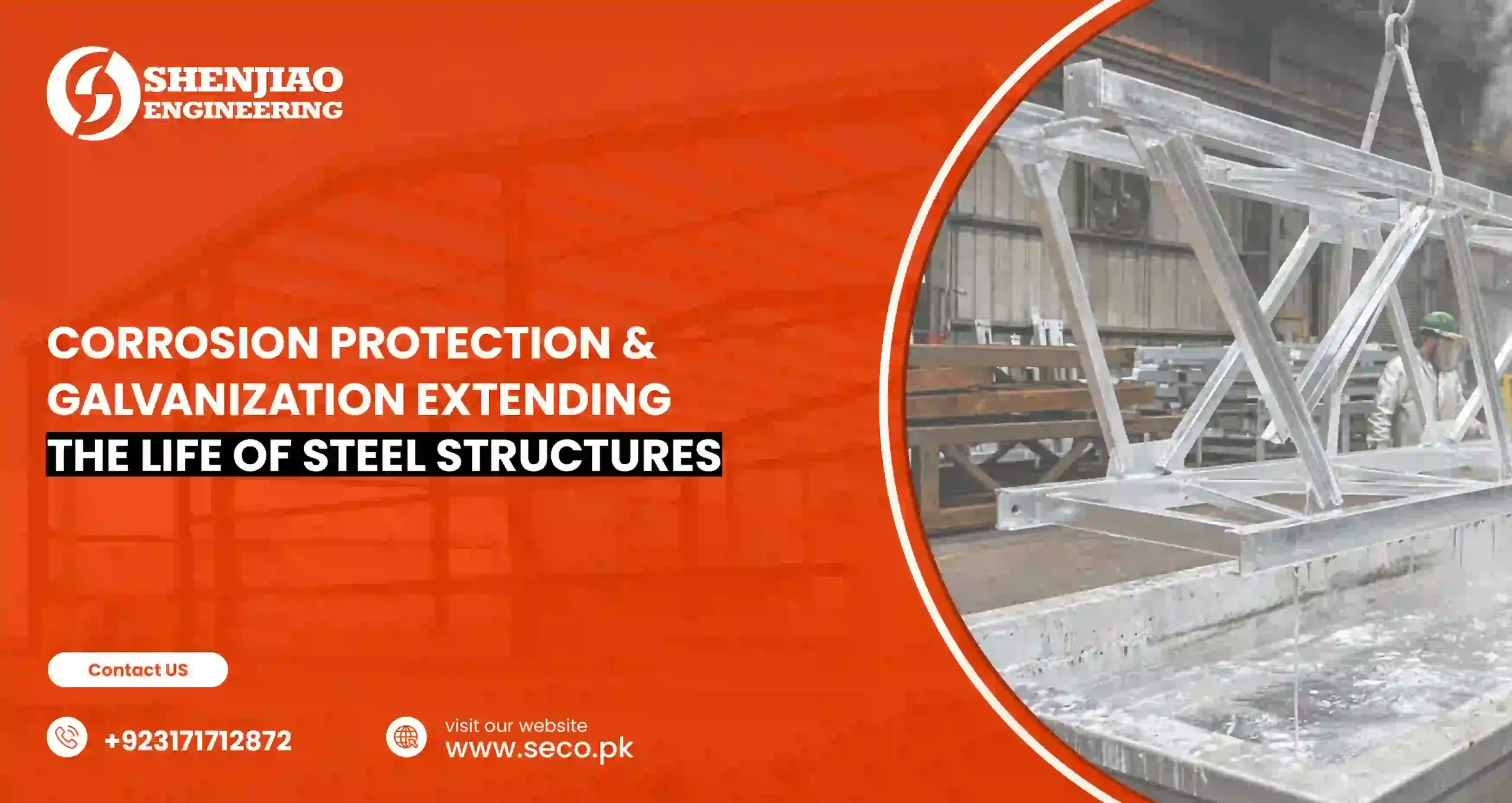
Corrosion Protection & Galvanization: Extending the Life of Steel Structures
Introduction
Steel is prized for its strength and speed of construction, but like any material exposed to the elements, it needs protection from its biggest long-term threat: corrosion. Whether a structure sits in Karachi’s humid coastal air, a dusty industrial zone in Punjab, or a chemical processing site with corrosive fumes, proper corrosion protection determines whether a steel building lasts 15 years or 50. This guide explains how galvanization and related protective measures extend the working life of a steel structure.
Understanding Corrosion in Steel Structures
Corrosion occurs when steel reacts with oxygen and moisture in the environment, gradually converting structural steel into rust. Left unaddressed, this process weakens load-bearing members over time, potentially compromising structural integrity. Environmental factors that accelerate corrosion include coastal humidity and salt air, industrial pollutants and chemical exposure, and prolonged contact with water in poorly drained areas.
What Is Hot-Dip Galvanization?
Hot-dip galvanization involves coating steel components in molten zinc, creating a metallurgically bonded protective layer. This zinc coating protects the underlying steel in two ways. It acts as a physical barrier preventing moisture and oxygen from reaching the steel surface, and it provides sacrificial protection, meaning the zinc corrodes preferentially even if the coating is scratched, protecting the exposed steel underneath.
Galvanized steel components used in properly designed structures can maintain their protective coating for decades with minimal maintenance, making galvanization one of the most cost-effective long-term investments in a steel building’s durability.
Galvanization vs. Painted Coatings
Painted protective coatings offer a lower upfront cost but require more frequent reapplication, particularly in harsh environments, and provide only a barrier form of protection rather than the sacrificial protection zinc offers. Many industrial projects in Pakistan use a combination approach: galvanized primary structural steel paired with a painted topcoat for additional protection and aesthetic finishing, sometimes called a duplex system.
Where Corrosion Protection Matters Most
Coastal and humid regions. Facilities near Karachi and other coastal areas face accelerated corrosion risk due to salt-laden air, making robust protection essential from the design stage.
Chemical and processing plants. Structures exposed to acidic or corrosive fumes need specialized coating systems designed for their specific chemical exposure.
Agricultural and livestock facilities. Ammonia and moisture in dairy and poultry environments can be particularly aggressive toward unprotected steel.
Structures near water bodies or with poor drainage. Any building where water can pool or repeatedly contact steel members needs extra attention to protective coating and design detailing.
SECO’s Approach to Corrosion Protection
SECO evaluates each project’s environmental exposure during the design phase, recommending the appropriate protection system, whether that is hot-dip galvanization, specialized paint systems, or a duplex combination, based on the structure’s location, purpose, and expected service life. Proper detailing, such as avoiding water traps and ensuring adequate drainage, is built into the structural design itself rather than treated as an afterthought.
Conclusion
Corrosion protection is not an optional upgrade, it is a fundamental part of designing a steel structure that performs reliably for decades. Whether through hot-dip galvanization, protective coatings, or a combination approach, SECO ensures every structure is engineered to withstand the specific environment it will operate in.
Concerned about corrosion protection for your project? Get in touch with SECO to discuss the right solution for your site conditions.