

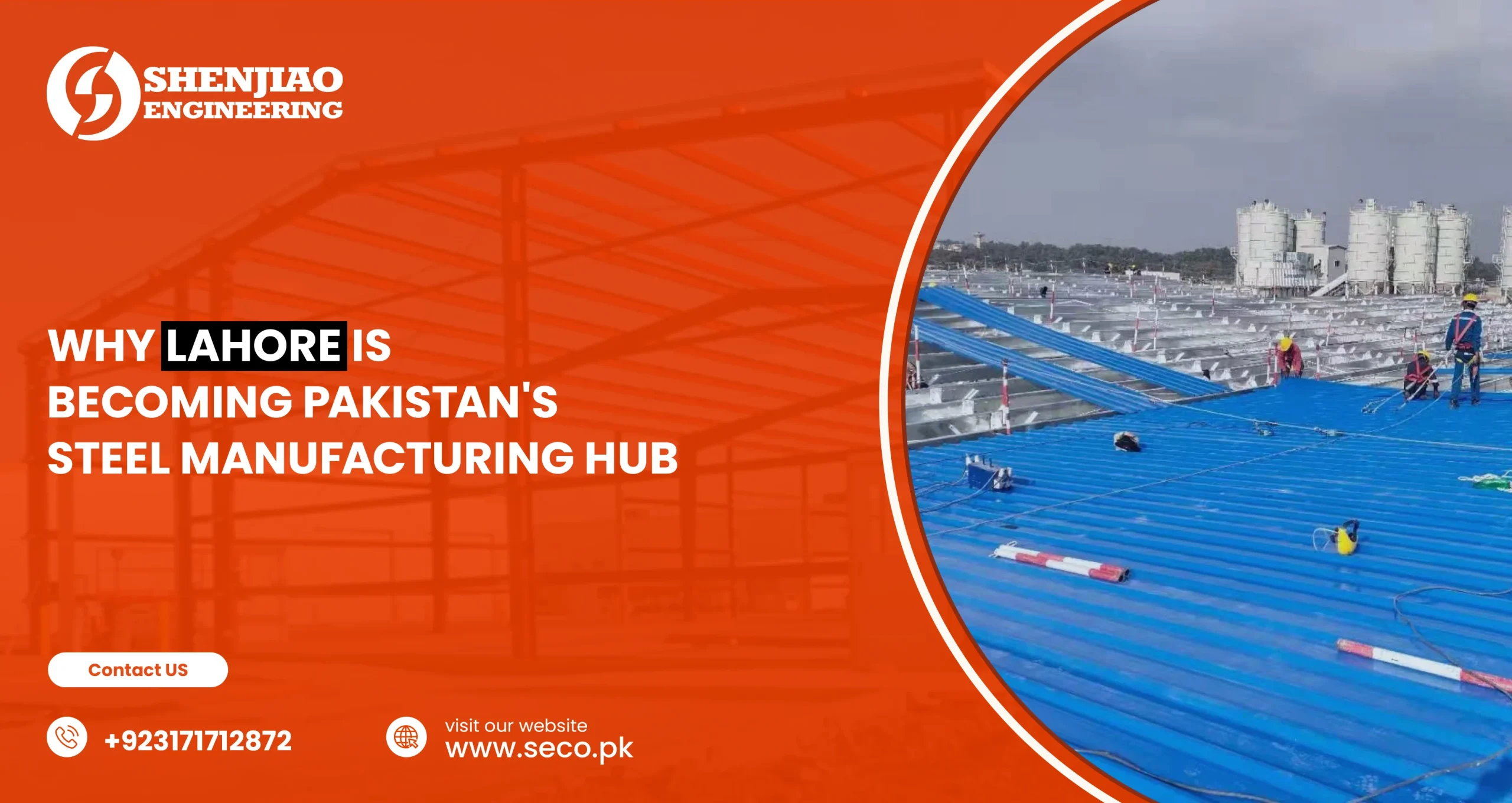
Why Lahore Is Becoming Pakistan’s Steel Manufacturing Hub
Pakistan’s second-largest city has always been known for its culture, its food, and its commercial energy. But Lahore is increasingly earning recognition for something else: its growing role as a centre of industrial manufacturing and, specifically, steel fabrication. The city that gave Pakistan some of its most significant textile and light manufacturing capacity is now becoming a meaningful hub for structural steel production.
Lahore’s Industrial Foundation
Lahore’s industrial credentials are not new. The city has been home to significant manufacturing activity since Pakistan’s early years — textiles, food processing, light engineering, and chemicals all have deep roots in Lahore’s industrial zones.
Sundar Industrial Estate, Quaid-e-Azam Industrial Estate, and the industrial areas around Raiwind Road and Multan Road have grown steadily over decades into substantial manufacturing districts. The infrastructure power supply, road access, labour pools, and supply chain networks that these districts have built up provides the foundation for newer and more capital-intensive industries.
Steel fabrication is benefiting directly from this foundation. The industrial ecosystem that exists in Lahore engineering skills, metalworking traditions, available industrial land, and connectivity to markets across Punjab and beyond makes it a natural location for steel manufacturing to grow.
Geographic Centrality and Market Access
Lahore’s geography is one of its strongest industrial assets. Situated at the heart of Punjab Pakistan’s most populous and economically active province Lahore has road, rail, and motorway connections to virtually every major city in the country.
For steel fabrication, this connectivity is significant. Raw materials can be sourced from multiple supply chains and delivered efficiently. Finished structural components can be dispatched to construction projects across Punjab, KPK, AJK, and beyond, all within commercially viable trucking distances.
The opening of the Lahore-Islamabad Motorway, the expansion of the M3 toward Faisalabad and beyond, and CPEC-related road improvements have strengthened Lahore’s position as a logistics hub — making it even more practical as a base for manufacturing businesses with national distribution needs.
Chinese Investment and Engineering Expertise
The CPEC era has brought Chinese industrial investment to multiple sectors in Pakistan, and Lahore has been one of the primary landing points for that investment. Chinese manufacturing firms, engineering companies, and joint-venture partnerships have established operations in and around the city, bringing with them capital, technology, and management practices.
This inflow of Chinese industrial expertise has had a catalytic effect on Lahore’s manufacturing sector. Local businesses have been exposed to international standards in quality management, production efficiency, and engineering capability. Joint ventures have transferred technical knowledge that would otherwise have taken decades to develop organically.
SECO is a direct expression of this dynamic. Founded as a China-Pakistan joint venture in Lahore, SECO has brought internationally benchmarked steel fabrication capability to Pakistan’s largest industrial city. Our operations combine the technical depth of Chinese manufacturing experience with deep familiarity with Pakistani construction markets, logistics, and client needs.
Skilled Labour and Technical Education
Manufacturing in the modern sense is not just about having machines and materials it requires people with the skills to operate them. Lahore’s labour market has long provided manufacturing industries with a workforce that, once trained, is technically capable and adaptable.
The presence of major engineering universities UET Lahore, NUST’s affiliates, and numerous polytechnic institutions — means a steady pipeline of qualified engineers and technical graduates who can fill skilled roles in steel fabrication and related industries.
As steel fabrication facilities in Lahore have grown, they have also invested in workforce development training welders, machine operators, structural steel erectors, and quality inspectors to internationally relevant standards. This investment in human capital is building a technical workforce that will support Lahore’s manufacturing ambitions well into the future.
Infrastructure for Growth
Lahore’s physical infrastructure for industrial activity has continued to improve. The development of new industrial estates, improvements in power supply reliability, and investment in logistics infrastructure have reduced some of the operational friction that has historically challenged Pakistani manufacturers.
The Lahore Dry Port provides crucial connectivity to international trade routes important for steel fabricators who import raw materials or export finished components. The broader improvements to Pakistan’s port and customs infrastructure, while still ongoing, have made international supply chains more manageable than they were a decade ago.
For a steel fabrication business operating in Lahore, the combination of improved logistics, a strong local labour market, and proximity to Pakistan’s largest construction market creates a genuinely competitive operating environment.
SECO: Building Lahore’s Steel Future
SECO’s base in Lahore is not incidental it is a deliberate positioning at the heart of Pakistan’s evolving steel manufacturing landscape. From Lahore, we serve construction and industrial projects across Punjab and beyond, delivering steel structures, prefabricated buildings, and construction machinery to clients who need engineering solutions that meet international standards.
As Lahore’s role as a steel manufacturing hub continues to develop, SECO is committed to contributing to that development through quality fabrication, technical innovation, and the kind of reliable delivery that builds long-term client relationships.
We believe that what is being built in Lahore’s industrial sector today will define Pakistan’s construction capabilities for the next generation. We are proud to be part of that story.
Learn more about SECO’s work at seco.pk.