


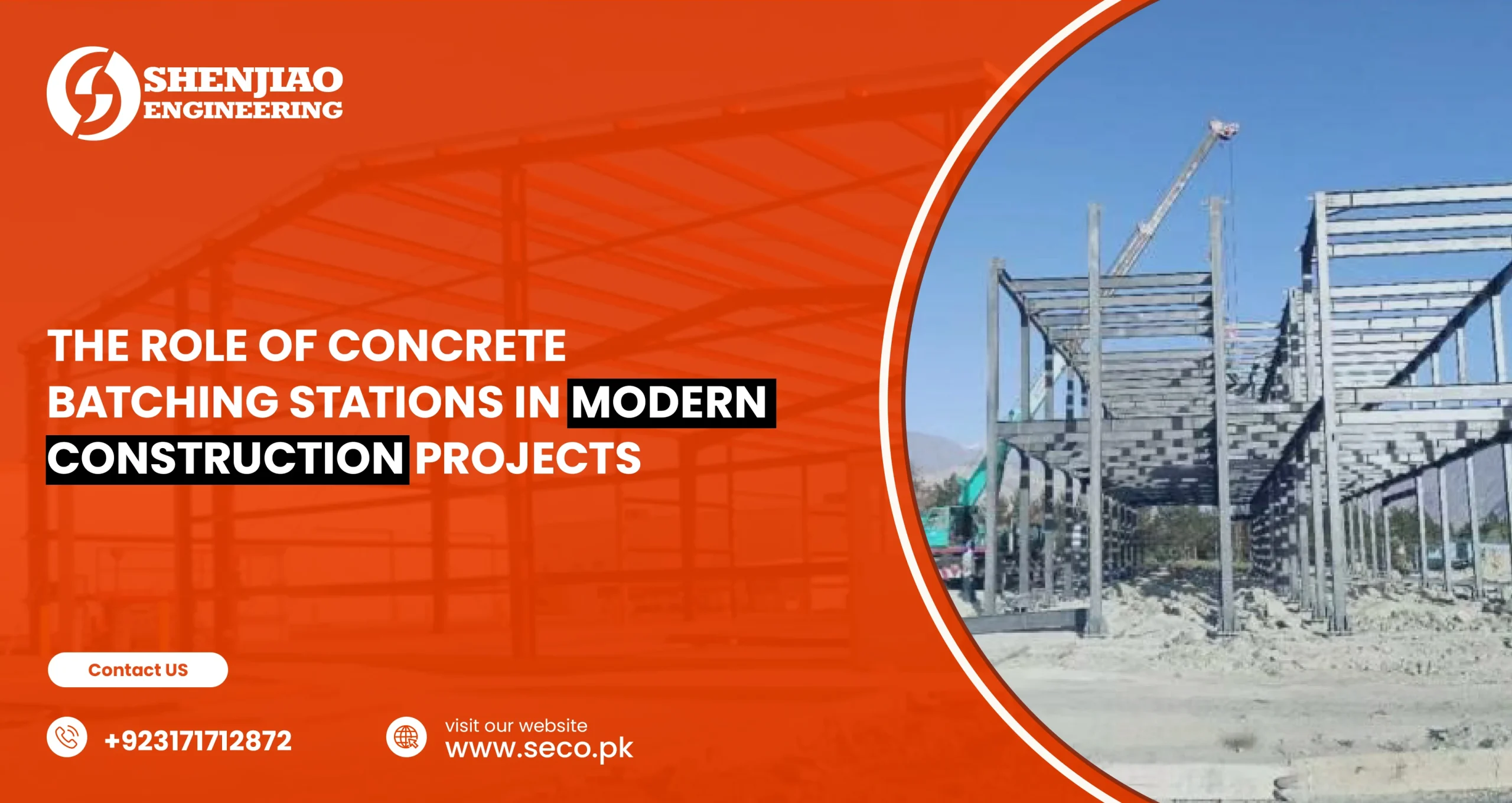
The Role of Concrete Batching Stations in Modern Construction Projects
Concrete is foundational to construction literally. It forms the floors we walk on, the foundations that carry our buildings, the walls that contain and divide space, and the roads that connect our cities. Getting concrete right is not optional. And getting it right, at scale, consistently, across a large project or multiple projects simultaneously, requires more than bags of cement and a portable mixer.
What Is a Concrete Batching Station?
A concrete batching station also called a concrete batching plant or ready-mix plant is a facility that produces concrete in large, controlled quantities by combining aggregate (gravel and sand), cement, water, and additives in precise proportions.
Unlike on-site mixing, which produces small batches with variable quality, a batching station operates at scale under tight process control. Ingredients are weighed and dispensed automatically according to pre-programmed mix designs, ensuring that every cubic metre of concrete produced meets the same specification as the last.
Batching stations range in scale from compact, relocatable plants suited to a single large project to large permanent installations producing hundreds of cubic metres per hour for multiple clients.
Why Quality Control in Concrete Matters
Concrete may seem like a commodity, but its properties vary enormously depending on the accuracy of the mix design and the consistency of production. Compressive strength, workability, setting time, shrinkage behaviour, and durability are all functions of what went into the mix and how it was combined.
In structural applications foundations, columns, beams, slabs concrete that does not meet its specified strength is a structural liability. In Pakistan, variable concrete quality has been implicated in building performance issues that have had serious consequences.
A concrete batching station addresses this risk directly. When ingredients are weighed and mixed under automated control, the variation in output quality is minimised. Engineers can specify a concrete grade and trust that it will be delivered consistently every batch, every day, throughout a project.
Scale and Speed on Large Projects
Large construction projects industrial buildings, infrastructure works, high-rise developments require concrete in volumes and on timescales that manual mixing simply cannot support.
A modern batching station can produce concrete in quantities that keep multiple placing crews working simultaneously without waiting for supply. This production capacity removes concrete supply as a bottleneck in construction schedules an important benefit on projects where programme delay is costly.
For CPEC-related industrial and infrastructure construction, where project scales are large and timelines are commercially significant, concrete batching stations have become standard equipment. They are the only practical way to supply the concrete volumes these projects require at the quality they demand.
Mobility and Project-Specific Deployment
One of the most practical aspects of modern concrete batching stations is that many designs are relocatable. Mobile and semi-mobile batching plants can be set up at a project site, operate for the duration of that project, and then be dismantled and redeployed elsewhere.
This mobility is valuable for construction companies operating across multiple project sites. Rather than investing in a permanent installation at a fixed location, a relocatable batching plant can follow the project pipeline set up where concrete is needed, when it is needed.
SECO’s concrete batching solutions include options configured for this kind of mobile, project-specific deployment, alongside larger installations suited to serving multiple clients from a fixed location.
Efficiency, Waste Reduction, and Sustainability
Beyond quality and scale, concrete batching stations offer significant efficiency advantages over manual mixing. Automated ingredient weighing eliminates the over-ordering and wastage that characterises manual operations. Water addition is precisely controlled, which matters both for mix design accuracy and for water conservation increasingly important in Pakistan’s context.
Admixtures chemicals that modify concrete properties can be precisely dosed at a batching station in ways that are difficult to achieve consistently by hand. This allows engineers to specify concretes with enhanced properties: higher early strength, improved workability, extended setting time for hot weather placement, or better durability in aggressive environments.
The environmental case for batching over manual mixing includes reduced waste, more efficient use of cement (a carbon-intensive material), and the ability to incorporate supplementary cementitious materials such as fly ash or slag as partial cement replacements, reducing both carbon footprint and material cost.
SECO’s Concrete Batching Solutions
SECO supplies concrete batching stations configured for the demands of Pakistani construction projects industrial, commercial, and infrastructure. Our equipment is sourced from internationally proven manufacturers and is supported by full technical assistance from our team.
We work with clients to identify the right plant specification for their production requirements: output capacity, mobility requirements, mix design flexibility, and the integration of automated controls and quality monitoring.
Whether you are setting up a batching operation for a single large project or building a commercial ready-mix concrete business, SECO can support you with the right equipment and the technical knowledge to operate it effectively. Visit seco.pk to discuss your concrete batching requirements.