


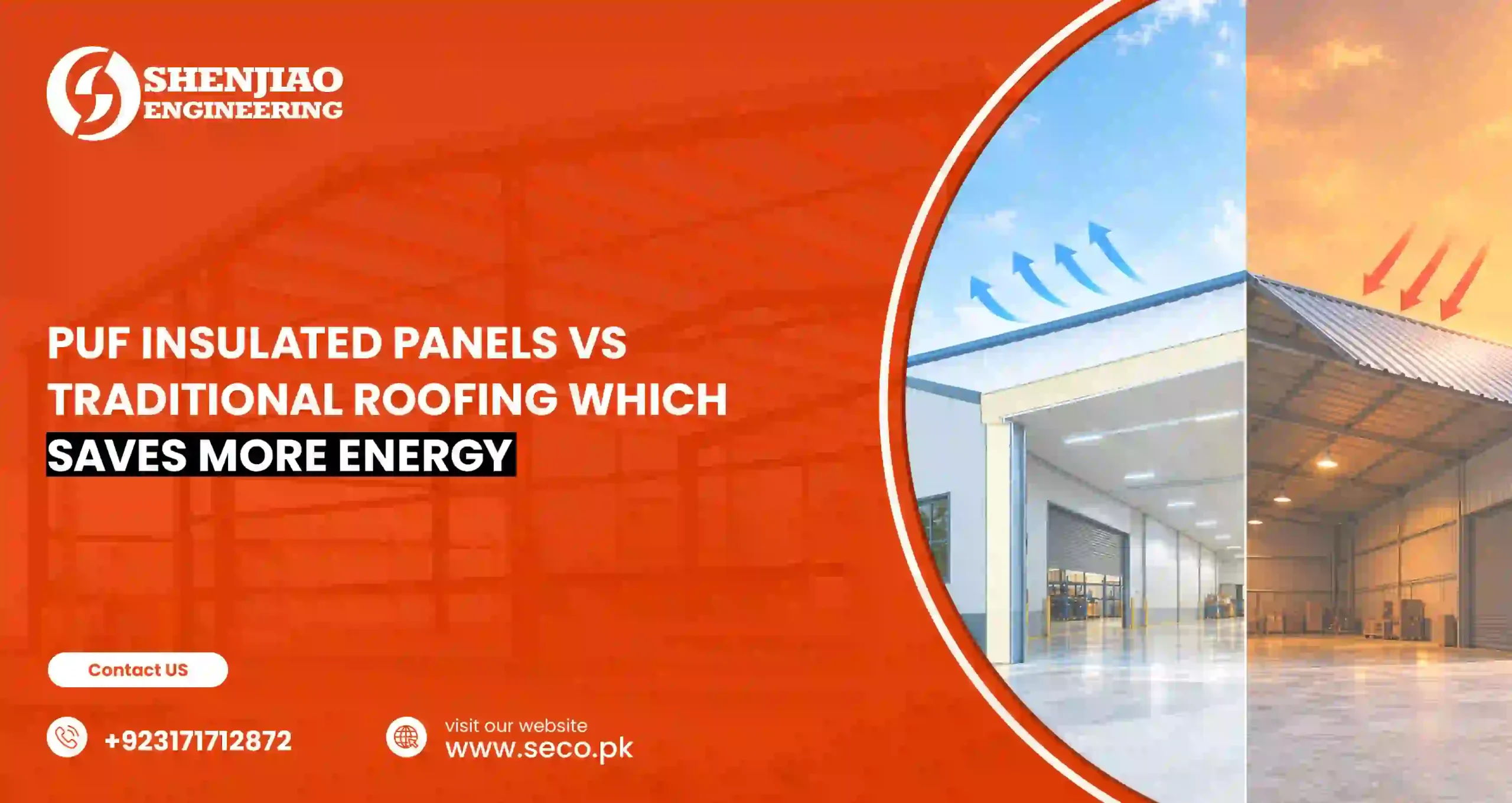
PUF Insulated Panels vs Traditional Roofing: Which Saves More Energy?
Introduction
Roofing choice affects far more than weatherproofing. For industrial and commercial buildings across Pakistan, where summer temperatures regularly climb past 40 degrees Celsius, the roof plays a major role in indoor temperature, energy consumption, and worker comfort. This comparison looks at PUF (polyurethane foam) insulated panels against traditional roofing options to help facility owners understand which delivers better long-term energy performance.
What Are PUF Insulated Panels?
PUF panels consist of a rigid polyurethane foam core sandwiched between two metal sheets, typically pre-painted galvanized steel or aluminum. The foam core provides excellent thermal insulation, while the metal skins provide structural rigidity and weather resistance. These panels are manufactured to precise thicknesses depending on the insulation performance required.
What Counts as Traditional Roofing?
Traditional roofing in this comparison refers to single-skin metal sheeting (often corrugated or profiled steel sheets) without a dedicated insulation layer, sometimes combined with a separate ceiling or false roof added later, and conventional concrete slab roofing, which is common in some commercial construction but adds significant weight and cost to a steel-framed building.
Energy Performance Comparison
Thermal insulation. PUF panels offer substantially higher thermal resistance than single-skin metal sheeting, meaning less heat transfers into the building during summer and less heat escapes during cooler months. This directly reduces the load on cooling systems.
Reduced cooling costs. Facilities using PUF panels typically see meaningfully lower air conditioning and ventilation costs compared to buildings with uninsulated metal roofing, since the building does not have to fight against constant heat gain through the roof.
Condensation control. Single-skin metal roofing is prone to condensation forming on the underside during temperature swings, which can drip onto machinery, inventory, or work areas. PUF panels significantly reduce this risk due to their insulating properties.
Consistent indoor temperatures. Buildings with PUF roofing experience less temperature fluctuation throughout the day, benefiting both worker productivity and any temperature-sensitive inventory or processes.
Cost Considerations
PUF panels carry a higher upfront material cost compared to single-skin sheeting, but the difference is often recovered over time through reduced cooling costs, particularly for facilities that run air conditioning or climate control for significant portions of the year, such as warehouses storing temperature-sensitive goods, food processing and cold chain facilities, and office or retail spaces within a commercial steel structure.
For facilities without climate control needs, such as basic storage warehouses, the additional insulation investment may be less critical, and a well-ventilated single-skin roof combined with proper design can be sufficient.
Additional Benefits of PUF Panels
- Lighter weight than concrete alternatives, reducing structural load requirements
- Faster installation since panels arrive pre-fabricated and ready to fit
- Improved acoustic performance, useful in facilities near residential areas or with noise-sensitive operations
- Fire-rated options available for applications with specific fire safety requirements
SECO’s Recommendation Approach
SECO evaluates each project’s climate control needs, budget, and operational requirements before recommending a roofing solution. Not every facility needs the highest insulation specification, and
matching the roofing system to the actual use case ensures clients get the best value rather than over-specifying or under-specifying their building envelope.
Conclusion
For facilities where temperature control, energy costs, or condensation are genuine concerns, PUF insulated panels offer a clear long-term advantage over traditional roofing. SECO helps clients weigh the upfront investment against operational savings to choose the right solution for their specific building.
Not sure which roofing system fits your project? Talk to SECO’s design team about your building’s specific requirements.